
The Stability Paradox: Hanyang University Researchers Challenge Bedrock Economic Belief
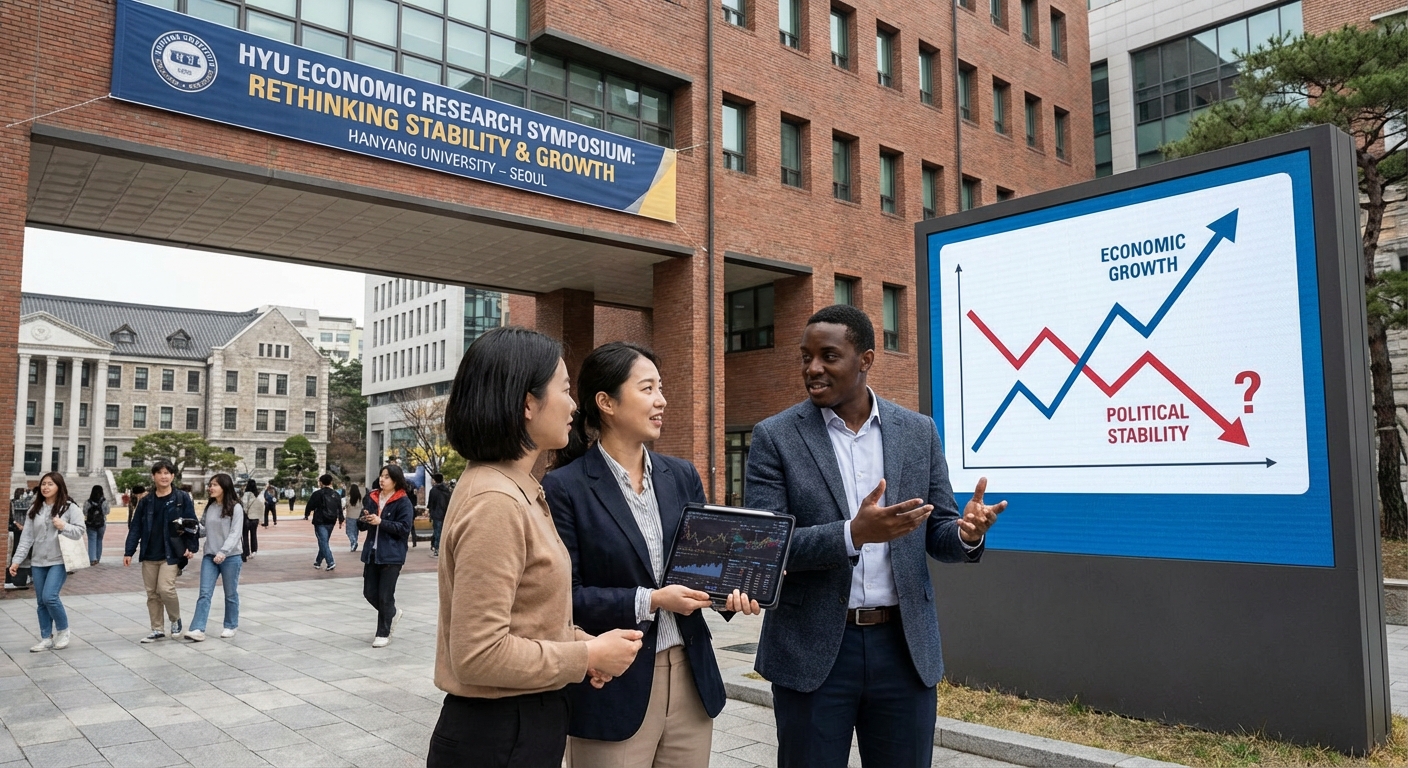
Imagem meramente ilustrativa, criada por I.A.
In a significant development for the field of political economy, professors at South Korea's esteemed Hanyang University (HYU) have identified what is being described as a 'paradoxical relationship' between a nation's political stability and its economic growth. The finding, reported by News H, directly confronts the widely held belief that stability is a direct and necessary precondition for prosperity, introducing a critical new layer of complexity to our understanding of national development.
Rethinking the Stability-Growth Nexus
For decades, the consensus among economists, policymakers, and global financial institutions has been largely unequivocal: political stability fosters a predictable environment, which in turn attracts foreign investment, encourages long-term domestic planning, and ultimately drives economic expansion. The research from HYU puts a crucial question mark next to this fundamental assumption, suggesting the dynamic may not be so linear.
While the initial report does not detail the specific nature of the paradox, its identification alone is enough to spark intense debate. It compels analysts to consider scenarios previously pushed to the theoretical fringe—for instance, whether excessive or prolonged stability might, under certain conditions, lead to economic stagnation by entrenching established interests, stifling disruptive innovation, or preventing necessary structural reforms. Conversely, it raises the question of whether certain forms of political change, often labeled as instability, could act as a catalyst for breaking economic gridlock.
Implications for Global Policy and Investment
The study's implications are profound, potentially forcing a re-evaluation of how risk and opportunity are assessed on a global scale. The finding prompts several critical questions for a world navigating complex geopolitical and economic shifts:
- At what point might political stability cease to be an asset and become a liability for economic dynamism?
- Could certain types of political change serve as catalysts for fostering more inclusive and sustainable growth?
- How must international bodies and investors adjust their models for assessing country risk to account for this non-linear relationship?
The research from the Hanyang University team marks the beginning of a potentially transformative conversation. By challenging one of the most established pillars of economic thought, their work underscores the urgent need for a more nuanced understanding of the intricate dance between governance and growth in the 21st century. The global community will be watching closely as further details of this pivotal study emerge.