
A World Remade: Analyzing the 'Demolition' of the Global Order and What May Follow
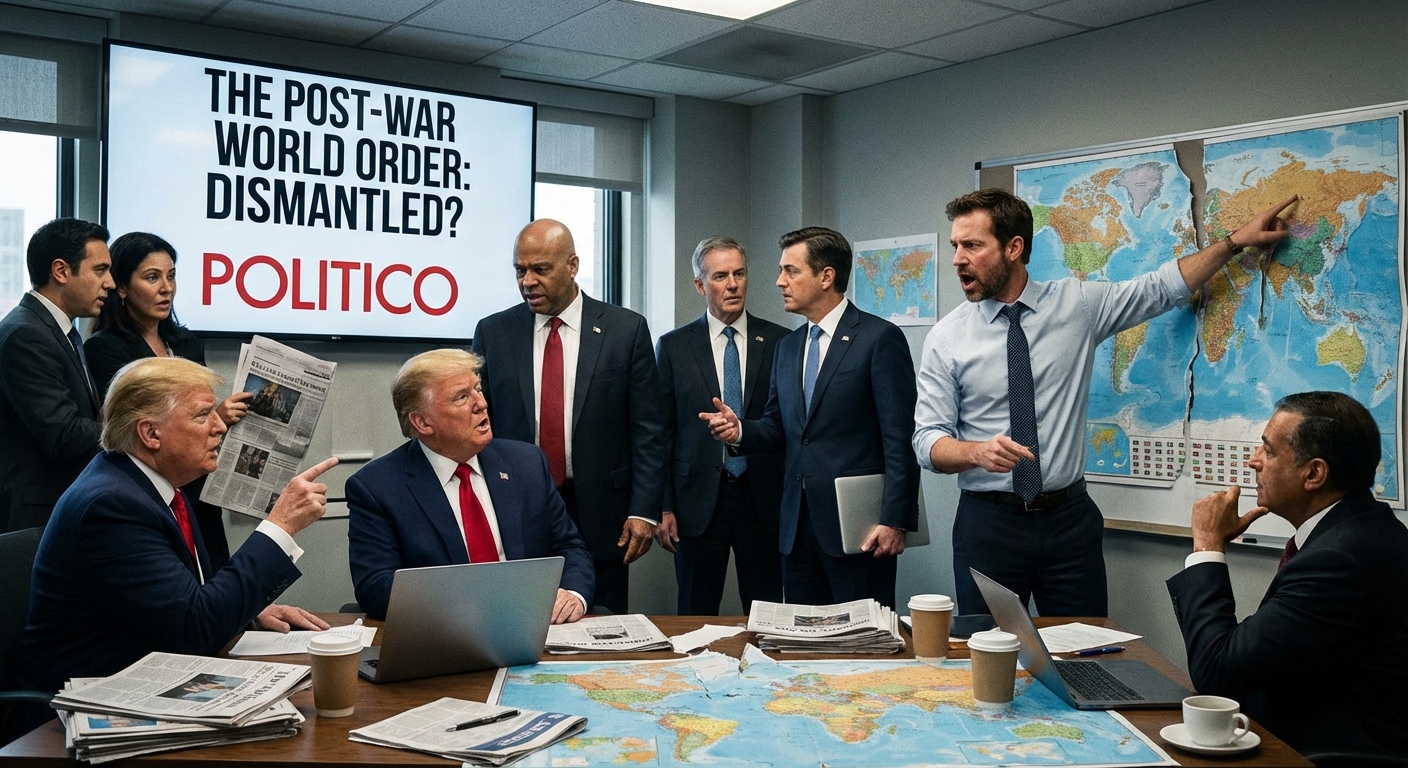
Imagem meramente ilustrativa, criada por I.A.
A provocative headline from Politico has ignited debate in foreign policy circles, positing that former President Donald Trump is not merely challenging, but actively 'demolishing the global order.' This framing suggests a fundamental and perhaps irreversible disruption of the international system of alliances, institutions, and norms that has structured world affairs for decades.
The 'global order' typically refers to the post-World War II framework, characterized by institutions like the United Nations and NATO, free-trade agreements, and a set of shared security guarantees. The assertion of its 'demolition' implies a systematic unraveling of these structures in favor of a more nationalistic, transactional approach to international relations.
Envisioning What Might Come Next
The core of Politico's proposition lies in its forward-looking question: 'Here’s What Might Come Next.' While the full scope remains speculative, the premise of a dismantled order invites consideration of several potential future scenarios. These possibilities represent a significant departure from the interconnected world of recent history.
- A Shift to a Multi-Polar System: A world where the United States is no longer the central anchor, leading to the rise of competing regional power blocs and a more fragmented, less predictable geopolitical landscape.
- The Era of Transactional Diplomacy: A move away from enduring alliances toward a system where relationships are purely conditional and based on short-term, bilateral interests, potentially leading to greater volatility.
- The Erosion of Global Norms: The weakening of international institutions could lead to a decline in adherence to established rules on trade, conflict, and human rights, creating a more unstable and competitive environment.
Ultimately, the analysis highlighted by Politico serves as a stark prompt for leaders and observers worldwide. It forces a confrontation with the potential end of a familiar era and demands a serious evaluation of the architecture required to navigate the complex and uncertain future that may lie ahead.