
Council of Europe Signals Paradigm Shift in Youth Human Rights Education
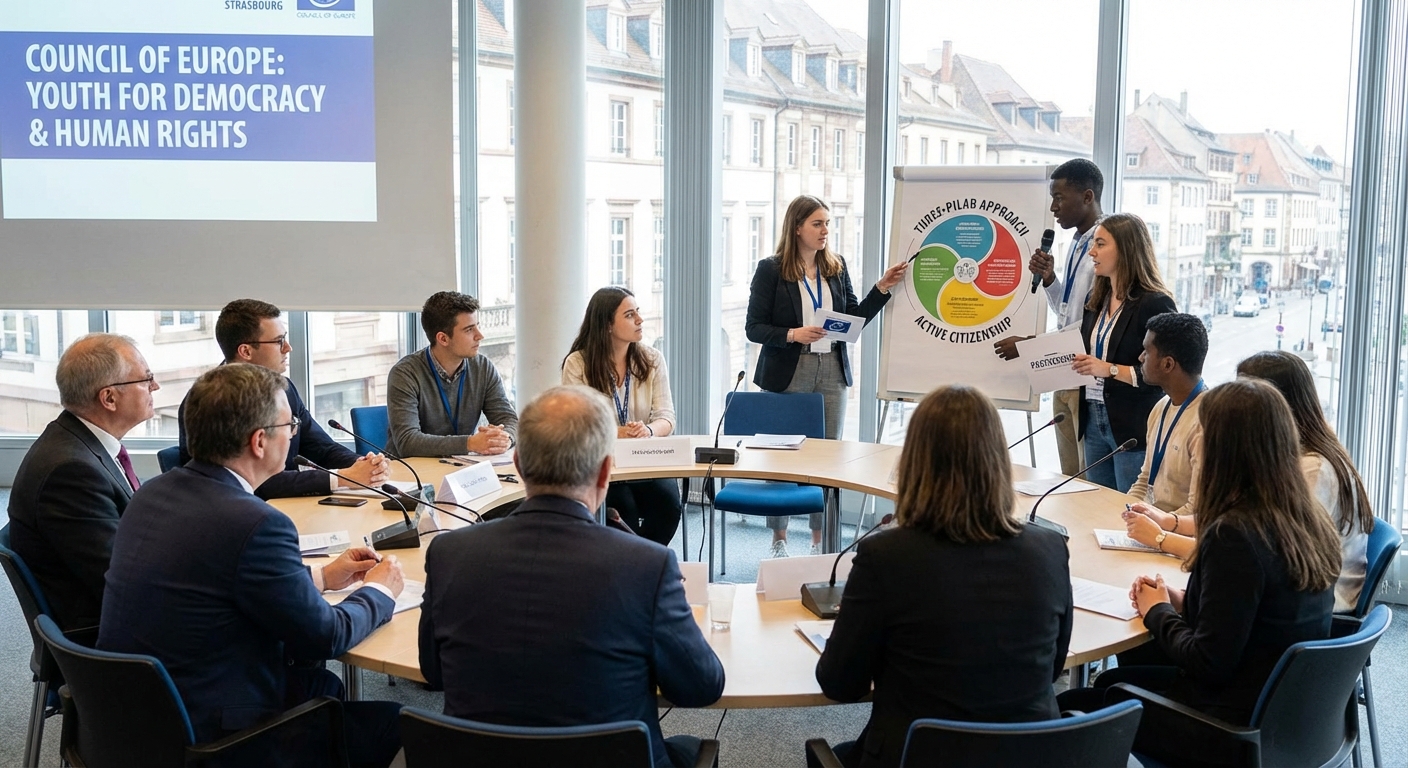
Imagem meramente ilustrativa, criada por I.A.
In a significant strategic positioning, the Council of Europe is promoting a comprehensive vision titled 'Unleashing human rights: education for, with and by young people'. This framework re-conceptualizes the role of youth in the human rights sphere, advocating for a transition from passive recipients of information to active agents of change. The initiative signals a critical evolution for non-governmental organizations, social projects, and educational institutions engaged in civic engagement and youth empowerment.
A Three-Pillar Approach to Empowerment
The core of the Council of Europe's vision is a tripartite model that progressively deepens youth involvement. This structure serves as a guide for civil society organizations aiming to design more impactful and sustainable human rights programs. The model is broken down as follows:
- Education FOR Young People: This represents the foundational, traditional approach where established institutions and experts develop and deliver human rights content to a youth audience. While essential for providing core knowledge, the framework implies this method alone is insufficient to 'unleash' human rights potential.
- Education WITH Young People: This second pillar calls for a collaborative process. It emphasizes the co-design and co-creation of educational initiatives, treating young people as valuable partners whose perspectives, experiences, and ideas are integral to shaping relevant and engaging content and methodologies.
- Education BY Young People: The final and most transformative pillar champions youth-led action. It focuses on empowering young people to become educators, advocates, and multipliers of human rights principles within their own peer groups and communities, fostering authentic, peer-to-peer learning and leadership.
Implications for the Third Sector
This strategic direction from the Council of Europe is more than a pedagogical suggestion; it is a clear signal to the third sector. NGOs and social projects seeking to align with cutting-edge human rights practices are implicitly encouraged to evaluate and evolve their own engagement models. Programs that can demonstrate a commitment to this holistic 'for, with, and by' methodology may be better positioned for future partnerships and public notices for project funding. The ultimate goal is to move beyond simply informing youth about their rights and toward equipping and empowering them to actively defend, promote, and embody those rights in society.