
The Green Capital Catalyst: WEF Spotlights Tripartite Strategy for Clean Fuel Market Acceleration
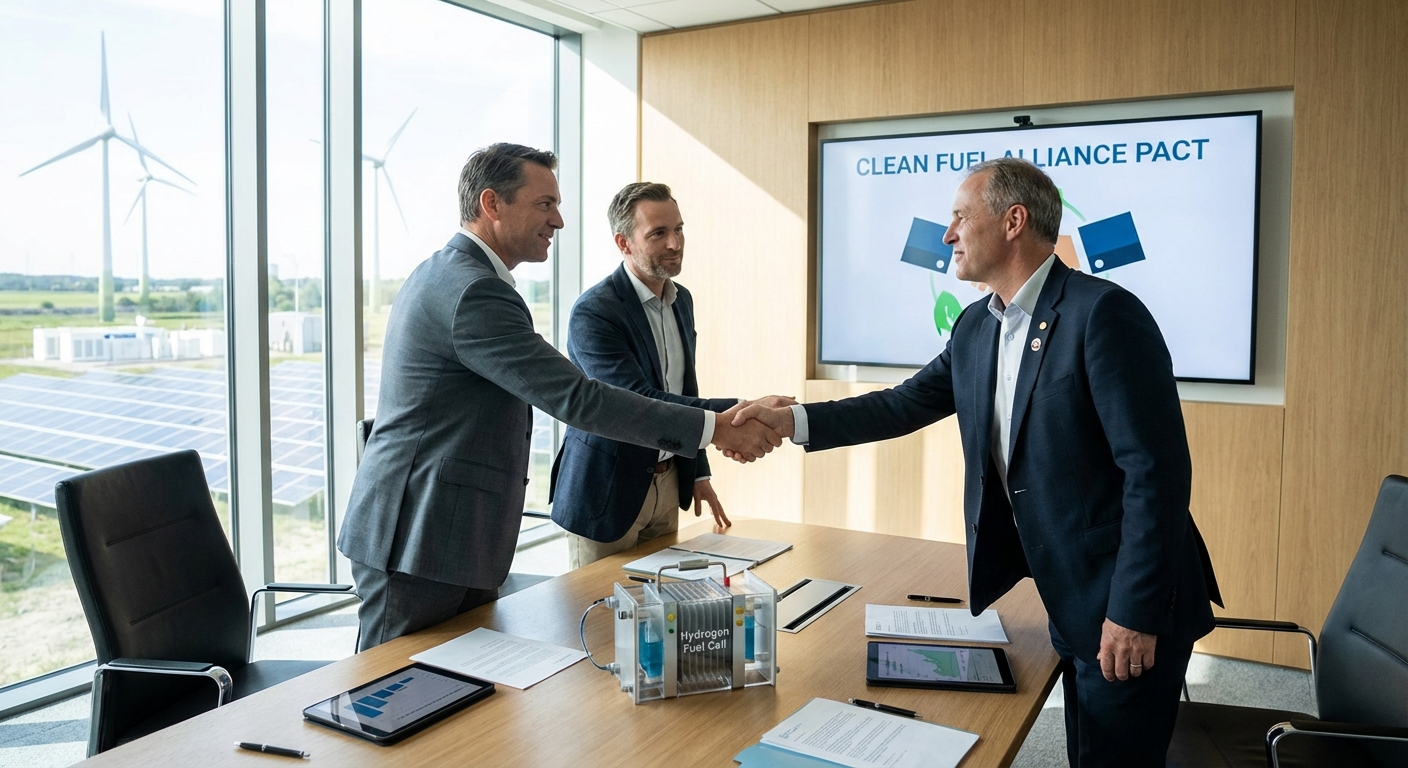
Imagem meramente ilustrativa, criada por I.A.
The Trillion-Dollar Convergence
In the global push toward decarbonization, the clean fuels market stands at a critical juncture, poised for explosive growth but shackled by significant economic and structural hurdles. A perspective put forth by the World Economic Forum, titled "Fuelling the Future," shifts the narrative from a purely environmental challenge to a premier capital investment opportunity, contingent on a powerful, coordinated effort from three key sectors: business, finance, and policy. This tripartite approach is presented as the essential catalyst to de-risk investments, scale production, and build the economic infrastructure for a new energy era.
Unlocking Investment: The Role of Finance and Policy
At the heart of the acceleration challenge lies the flow of capital. The analysis suggests that the financial sector's role is pivotal, extending beyond simple funding to architecting the very mechanisms that make clean fuel projects bankable. This involves creating innovative financial products, such as blended finance vehicles and green bonds specifically tailored to the risk profile of nascent energy technologies. However, private capital remains cautious without a stable and predictable landscape, which is where policy becomes the bedrock of investment.
Governments and regulatory bodies are identified as the key enablers, responsible for creating the market certainty that institutional investors demand. The strategic levers at their disposal include:
- Establishing long-term offtake agreements or mandates that guarantee future demand.
- Implementing clear and consistent carbon pricing or tax credit systems to level the economic playing field with incumbent fuels.
- Providing financial de-risking instruments, such as loan guarantees, to absorb initial project risks.
- Streamlining the complex permitting processes that can delay projects and inflate costs, thereby improving the internal rate of return for investors.
Business as the Engine of Scale and Employment
While finance provides the fuel and policy builds the road, the business community is positioned as the engine driving the transition. Corporations, particularly in hard-to-abate sectors like aviation, shipping, and heavy industry, are the primary consumers who can create the powerful demand signals needed to justify massive investment in production infrastructure. By making bold procurement commitments and integrating clean fuels into their supply chains, businesses can drive economies of scale, pushing down the "green premium" and accelerating cost-competitiveness.
This corporate-led demand is not merely a cost of doing business; it is framed as a significant driver of economic value and employment. The build-out of a global clean fuels market necessitates a new workforce skilled in advanced biorefining, hydrogen electrolysis, and synthetic fuel production. The resulting investment in infrastructure, research and development, and logistics represents a substantial new frontier for economic activity and job creation, transforming a climate imperative into a tangible pillar of future economic growth.