
Forging the Clean Fuel Economy: The Critical Convergence of Capital, Commerce, and Regulation
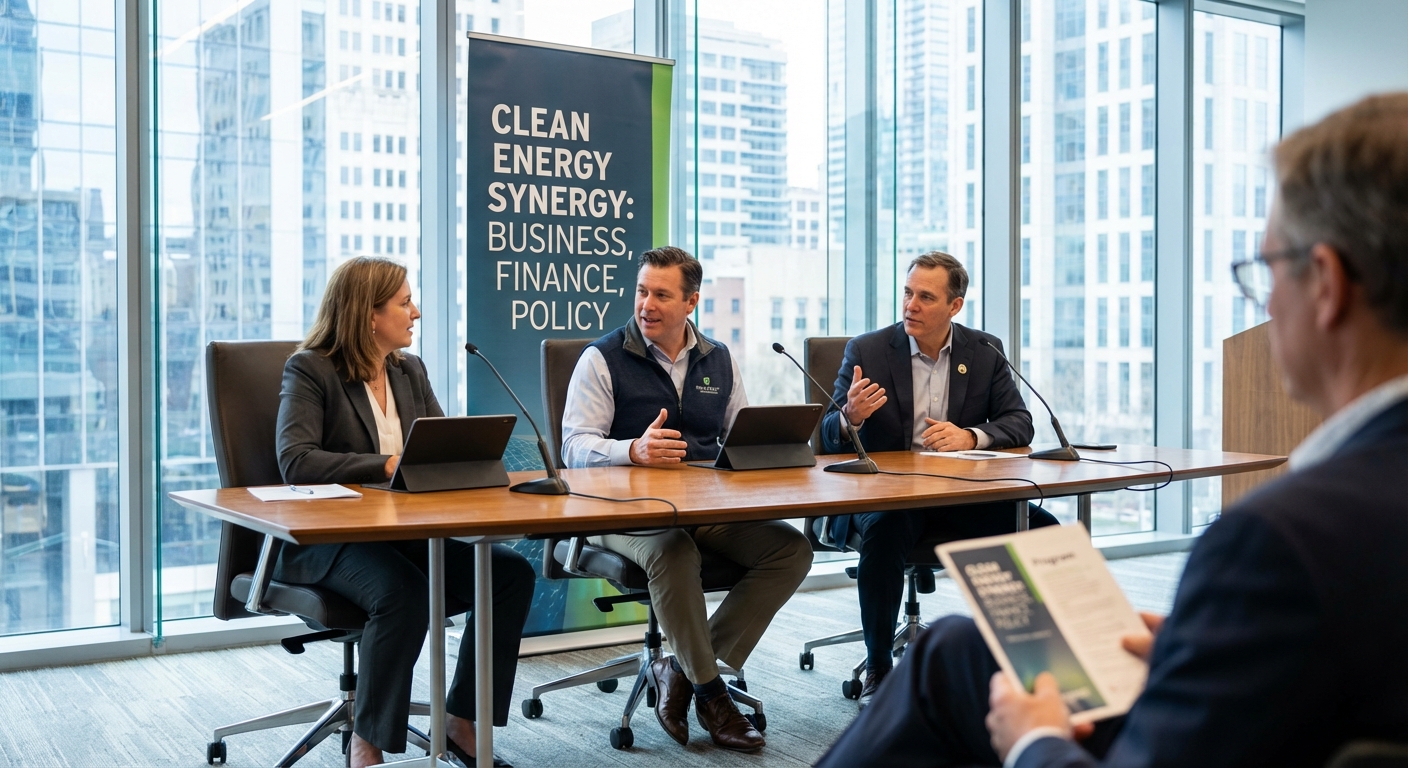
Imagem meramente ilustrativa, criada por I.A.
The transition to a sustainable energy future represents not merely a technological challenge, but a profound economic recalibration. The central question, as framed by analysis from the World Economic Forum, is how to accelerate the clean fuels market. The answer appears to lie not in a single breakthrough, but in the synergistic alignment of three powerful domains: business innovation, financial investment, and strategic policy.
Policy: De-Risking the Future
For any nascent market to flourish, it requires a stable and predictable environment, a function primarily served by government policy. In the context of clean fuels, policy acts as the foundational layer that signals market direction and mitigates investment risk. The discussion revolves around several key mechanisms:
- Creating clear, long-term demand signals through mandates, carbon pricing, or tax incentives.
- Streamlining regulatory and permitting processes to reduce project lead times and associated costs.
- Fostering international cooperation to harmonize standards and create larger, more liquid markets for new fuels and technologies.
Without this policy bedrock, capital remains on the sidelines, and business investment is confined to pilot projects rather than commercial-scale deployment.
Finance: Mobilizing Trillions in Capital
The scale of investment required to build out a global clean fuels infrastructure is monumental, far exceeding the capacity of public funds alone. This places the world of finance at the heart of the transition. The focus is on how to unlock and direct the vast pools of private capital toward these new energy assets.
- The development of innovative financial instruments, such as green bonds and blended finance vehicles, that cater to the unique risk-return profiles of clean fuel projects.
- The role of institutional investors, from pension funds to sovereign wealth funds, in allocating capital for long-term, sustainable returns.
- An evolution in risk assessment models within banks and investment firms to properly value the opportunities of the energy transition while pricing the risks of inaction.
Business: The Engine of Innovation and Execution
While policy sets the rules and finance provides the fuel, it is the business sector that builds the engine. Corporations are the primary agents of innovation, supply chain integration, and market creation. Their role is to translate policy signals and financial capital into tangible assets and services.
- Driving research, development, and the commercial scaling of next-generation fuel technologies, from green hydrogen to sustainable aviation fuels.
- Reconfiguring industrial processes and logistics networks to incorporate clean fuels, thereby creating the essential demand that underpins the entire market.
- Responding to growing pressure from consumers, shareholders, and employees to decarbonize operations, turning sustainability from a cost center into a source of competitive advantage and value creation.
Ultimately, the challenge outlined is one of coordination. The acceleration of the clean fuels market is less a matter of 'if' and more a matter of 'how fast'. The speed of the transition, and the economic opportunities it will generate, depends directly on the ability of these three sectors to work in concert, transforming a shared vision for a sustainable future into a functioning, global-scale market.