
The Youth Mandate: Council of Europe Reframes Human Rights Education as a Participatory Act
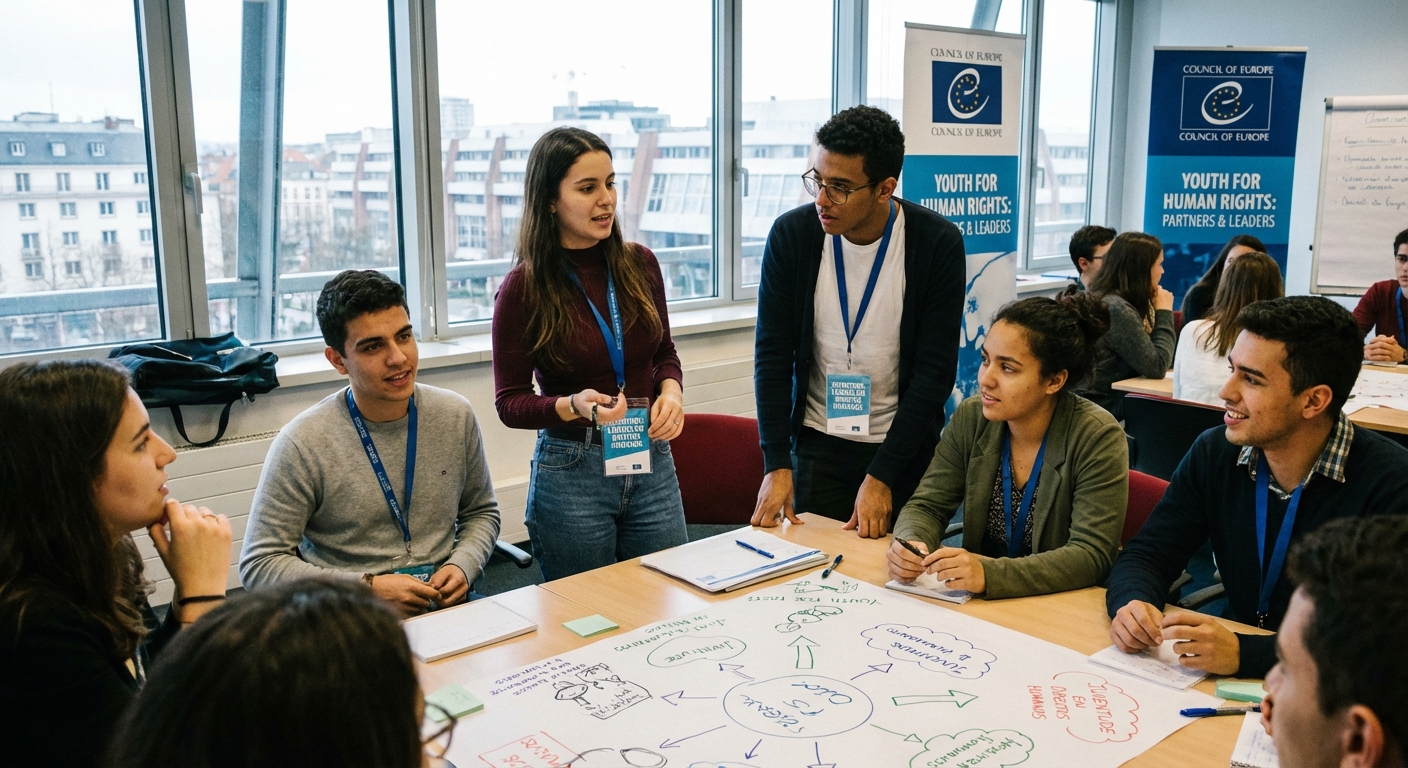
Imagem meramente ilustrativa, criada por I.A.
A Foundational Shift in Human Rights Pedagogy
In a significant articulation of its strategy, the Council of Europe is focusing on a powerful theme: “Unleashing human rights: education for, with and by young people.” This phrasing signals more than a simple educational program; it represents a profound evolution in how a leading international institution views the role of youth in the human rights ecosystem. The framework moves beyond the traditional top-down dissemination of information to embrace a more dynamic, inclusive, and empowering model of engagement.
The concept hinges on a tripartite structure that redefines the relationship between educators, institutions, and young learners. An analysis of this approach reveals a clear progression towards deeper youth involvement:
- Education FOR young people: This represents the essential foundation—providing youth with the fundamental knowledge of human rights principles, conventions, and mechanisms. It ensures a baseline of universal understanding.
- Education WITH young people: This level marks a critical shift towards partnership. It implies a collaborative process where educational content, methods, and projects are developed in concert with youth, ensuring relevance, engagement, and mutual respect.
- Education BY young people: The final and most transformative stage, this pillar recognizes and validates young people as credible and effective educators, advocates, and leaders. It supports peer-to-peer learning, youth-led campaigns, and their active participation in shaping human rights discourse and policy.
Implications for Civil Society and the Third Sector
This strategic focus from the Council of Europe serves as a potent directive for the non-governmental sector. For NGOs, social projects, and youth organizations, this framework validates and encourages the adoption of participatory methods that treat young people as genuine partners rather than mere beneficiaries. It implicitly calls on civil society to create platforms and opportunities where youth can exercise agency and lead initiatives.
By championing an approach where human rights are “unleashed,” the Council of Europe is promoting an environment of active citizenship. This perspective suggests that the ultimate goal of human rights education is not just awareness, but action. For organizations operating in the social sector, this translates into a mandate to foster environments where young people are equipped, empowered, and given the space to not only learn about their rights but to actively shape, defend, and propagate them within their communities and beyond.