
Amazon's $35 Million 'Melania' Gambit: A Content Bet or a Capital Strategy?
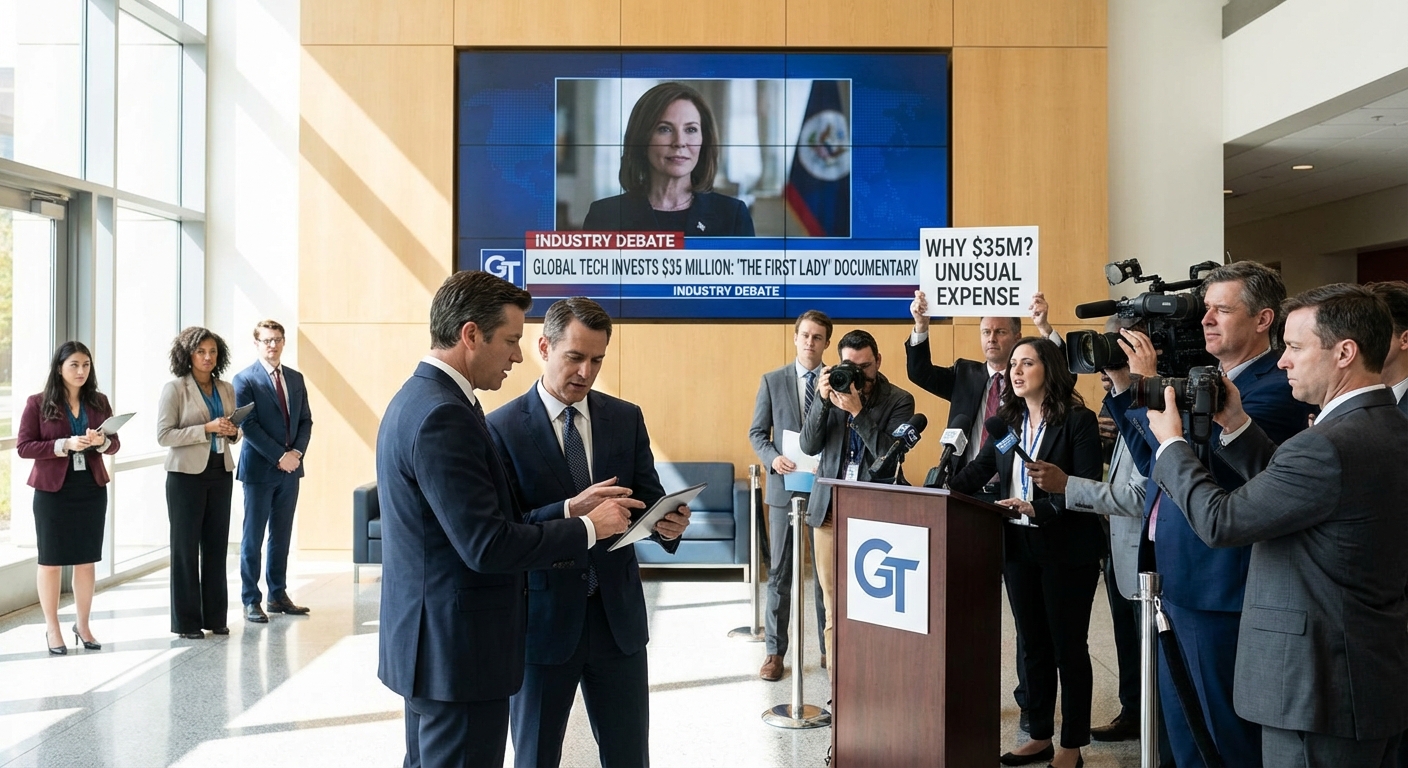
Imagem meramente ilustrativa, criada por I.A.
Amazon has committed a staggering $35 million to the promotional campaign for its new film centered on the first lady, an investment figure that has sent ripples through the media and financial sectors. This level of marketing expenditure is profoundly atypical for a documentary, a genre typically supported by far more modest promotional budgets. The decision immediately positions the film not just as a piece of content, but as a significant corporate capital allocation demanding justification to investors and the market.
An Unprecedented Investment
The core of the debate among critics and industry observers revolves around the economic rationale for such a large-scale expenditure. In an increasingly saturated streaming market, companies are constantly re-evaluating the return on investment (ROI) for content. The $35 million price tag for promoting a single documentary has led to pointed questions regarding the tech giant's motivations.
- Is the company seeking to capture a specific, high-value subscriber demographic with this targeted push?
- Could the investment be part of a broader corporate strategy, aimed at influencing perceptions beyond the streaming service?
- Does this signal a new, aggressive marketing doctrine where visibility, at any cost, is deemed essential for success in the content wars?
From a purely financial standpoint, the investment represents a high-stakes wager. Typically, the success of a documentary is measured by critical acclaim, cultural impact, and its ability to retain subscribers at a relatively low cost. By applying a blockbuster-level marketing budget, Amazon is fundamentally altering this value equation and challenging established industry norms.
Ultimately, the $35 million promotion will serve as a crucial case study in modern streaming economics. Market analysts will be closely monitoring viewer data and subscription trends to determine if this massive outlay translates into a quantifiable return. Whether viewed as a bold strategic pivot or an inexplicable anomaly, Amazon's spending decision has ignited a critical conversation about the true cost and value of content in the digital age.